
How do money transfers work?
Dear community, let's discuss transfers today.
The need
You are in Sarh, southern Chad, and want to send money to your cousin in Koumra. Your friend Masra in Koumra wants to send money to Sarh. He offers to pay your cousin if you pay his beneficiary the same amount.
This happens repeatedly. Koulbou, your Kanembou friend, sees a business opportunity. With merchant cousins across the country, he can accept your money and have his network pay your beneficiary for a small commission. He has created a money-transfer service.
Some history
Western Union launched the first money-transfer service in 1851, long before the internet, using telegraphs to communicate transfer details. After the Second World War, Ria in 1987 and MoneyGram in 1988 joined. More recently, around 2010, internet applications such as Wise, Remitly and WorldRemit began competing with the 170-year-old model through cheaper transfers.
The principle
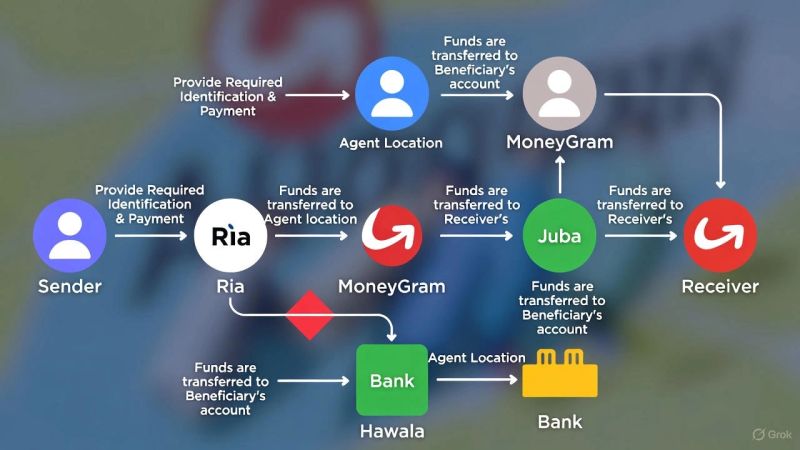
The principle remains the same as in 1851: cash deposit, secret code and beneficiary identification, followed by cash collection elsewhere after verification.
Two main methods
• Cash to cash, the traditional model described above.
• An application or website, such as Wise, Remitly or WorldRemit.
A recurring problem
Most transfer users have heard that transfers are unavailable because of a network problem. It is not always technical: sometimes it is about balancing incoming and outgoing volumes.
When Koulbou handles many outgoing transfers, he collects cash while his network pays out. Without enough incoming transfers in his area to balance this and let the network recover its funds, they may not want to keep paying customers. Participants, even subsidiaries of the same group, often agree a threshold. Once reached, outgoing transfers may stop so the short-funded party can replenish its cash.
If you enjoyed this post, like, share and follow this page.
#TransfertArgent #MoneyGram #Wise #Ria #FinancePersonnelle #digitalbanking #mobilemoney