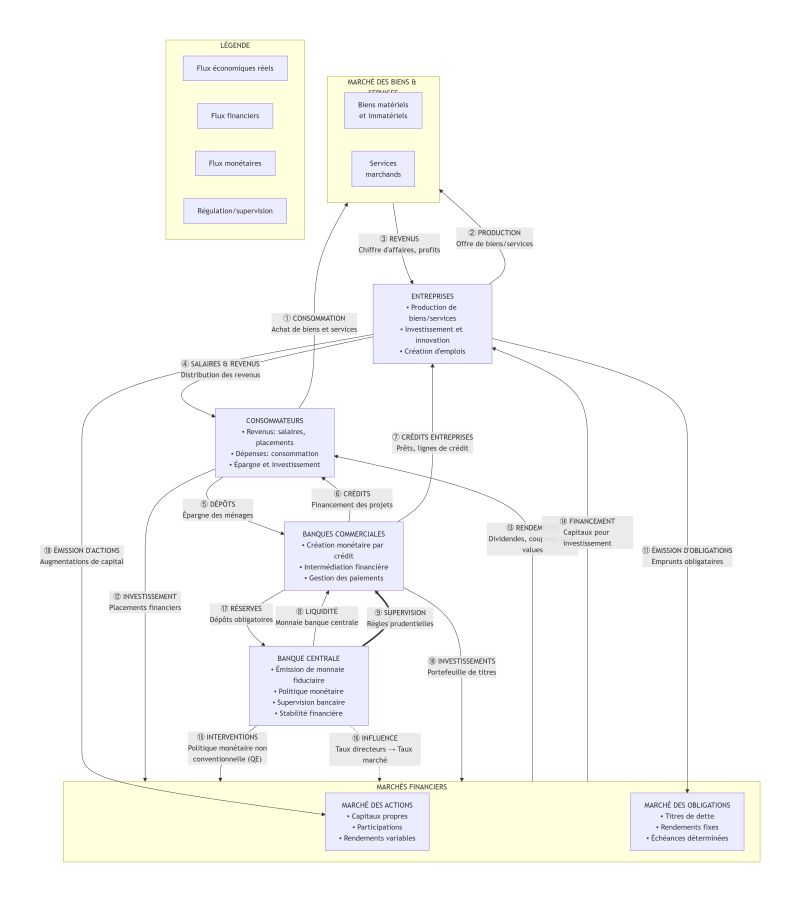
Money: participants in the monetary system, 3/4
Hello, community. Let's continue our series. Money is:
• An agreed representation accepted by a community, country or region, standing in for the material value of goods and services.
• Based on users' unwavering trust, so its issuance must be strictly controlled.
Now let's explore the major participants.
The commercial bank: a lady who loves money
Her main product is money. Among other things, a bank:
• Collects our savings and lends them to customers in need.
• Buys foreign currency to resell to us.
• Lends to other banks needing liquidity in exchange for remuneration.
• Finds many ways to make money grow. Like a librarian, it records everything in what it affectionately calls the general ledger.
Markets
Markets bring supply and demand together. Consider two types: goods and services, and financial markets.
Goods and services: visit Dembé market in N'Djamena to buy food or repair a motorcycle. Goods or services are directly exchanged for money.
Financial markets include shares and bonds.
1. Shares: I need XAF 500,000 to open a neighbourhood restaurant but have only XAF 450,000. Jean contributes XAF 50,000. I recognise a proportional ownership interest: 10%, or 50,000/500,000. He shares 10% of the risks and profits.
2. Bonds: I do not want to give Jean power over the business. He lends me money, and I pay interest come rain or shine.
Financial markets have participants and supervisory bodies. In Central Africa, these include BVMAC, COSUMAF and accredited institutions.
The central bank
The true owner of money manages note issuance and also lends to commercial banks. It:
• Controls interest rates.
• Creates money.
• Monitors inflation.
You now know the main participants. The final post will recap the theme.