ON US ATM WITHDRAWALS
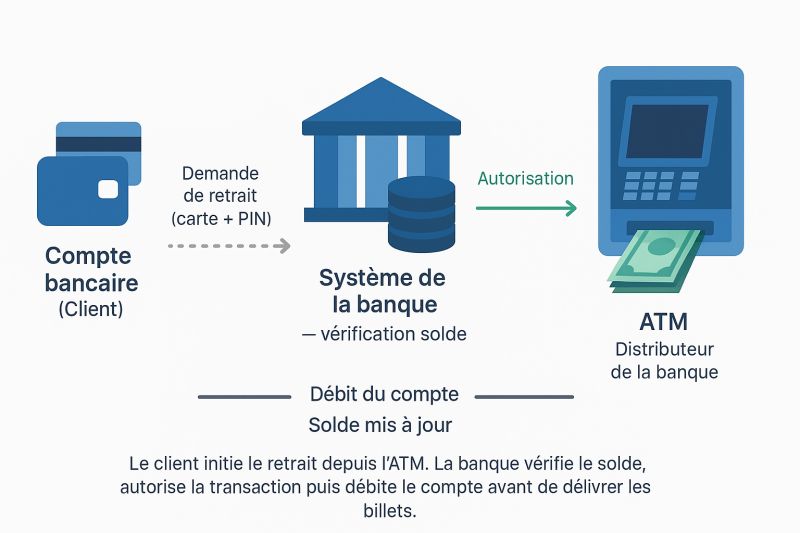
We use ATMs every day: insert a card, enter a PIN and an amount, and cash comes out. What is behind that technical magic? Today we discuss ON US withdrawals: customers using their own bank's ATM.
An ATM handles teller tasks such as withdrawals and deposits. The acronym means Automatic Teller Machine.
The process
Three steps are required:
1. Identification: the card and PIN identify the customer and bank.
2. Authorisation: the bank checks sufficient funds and internal or regulatory controls, including transaction limits and history. If all is well, it sends an OK.
3. Cash: the account is debited to credit the ATM, which dispenses notes. It is like withdrawing at your favourite teller.
Charges
ATMs were once seen as a value-added service with charged withdrawals. In CEMAC, however, COBAC made this service free some years ago.
Errors
ATM errors are increasingly rare, apart from insufficient funds, expired or inactive cards, suspicious transactions, connection or authentication issues. Other cases include:
Periodic limits
Banks set daily limits on withdrawal counts or amounts. A reached limit prevents the transaction.
Swapped cassettes
ATMs have cassettes configured for different denominations, such as CFA 10,000 and CFA 5,000. Staff may accidentally swap them. If the 10,000 cassette occupies the 5,000 position, a CFA 50,000 request could dispense CFA 100,000 while debiting only 50,000. My free advice: report it, because the bank will eventually detect the anomaly.
Number of notes
You request CFA 400,000, but only the CFA 5,000 cassette contains notes. This needs 80 notes, while ATMs generally dispense a maximum of 50 at once. The withdrawal fails even with sufficient funds.
Did you know all this? Share your favourite ATM story.
#ATM #Banque #Fintech #EducationFinanciere